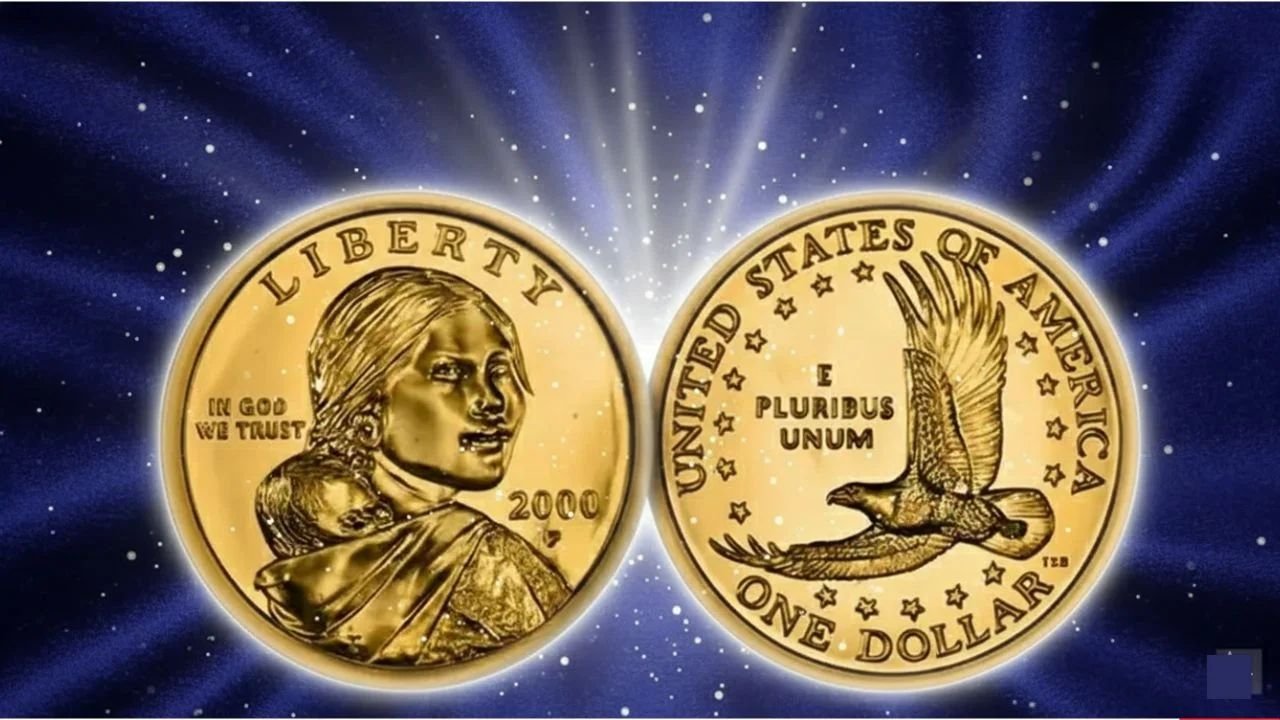
Rare $21 Million : The Sacagawea dollar was first released in 2000 in the United States. It was created to honor Sacagawea, a Native American woman who helped guide the Lewis and Clark Expedition. Her knowledge and courage played a big role in the success of that journey. The coin was also meant to encourage people to use dollar coins instead of paper bills. Even though it looked beautiful and had a golden color, many people did not use it in everyday shopping. Over time, it became more popular with coin collectors instead of regular buyers and sellers.
Design and Artwork Details
The front (obverse) of the coin shows Sacagawea carrying her baby son, Jean Baptiste. The portrait was designed by artist Glenna Goodacre. The image shows strength, care, and history all in one picture. Many collectors love this design because it feels warm and meaningful. The back (reverse) first featured a flying bald eagle. That design was created by Thomas D. Rogers. In 2009, the reverse design changed as part of the Native American Dollar Program. Since then, the back changes every year to celebrate Native American history and achievements.
Rare Versions That Made Headlines
Most Sacagawea dollars are only worth one dollar. However, a few rare types can be worth thousands — and some claims even talk about coins valued in the millions if they are special mint errors. One famous example is the “Cheerios Dollar.” In 2000, some coins were placed inside Cheerios cereal boxes as a promotion. A small number of these coins had sharper, more detailed eagle tail feathers. These special coins are now very valuable if they are in perfect condition. Another rare coin is the 2000-P Mule error, which accidentally used a Washington quarter front with the Sacagawea dollar back. Only a few of these exist.
Sacagawea Dollar Quick Facts Table
| Feature | Details |
|---|---|
| First Year Released | 2000 |
| Obverse Designer | Glenna Goodacre |
| Original Reverse Designer | Thomas D. Rogers |
| Years with Eagle Reverse | 2000–2008 |
| Native American Reverse | 2009–Present |
| Metal Composition | Copper core with manganese brass outer layer |
| Weight | 8.1 grams |
| Diameter | 26.5 mm |
| Edge | Smooth (Plain) |
| Mint Marks | P (Philadelphia), D (Denver), S (San Francisco) |
| Famous Rare Varieties | 2000 Cheerios Dollar, 2000-P Mule Error, 2000-P Wounded Eagle, 2001-S Proof |
| Grading Scale | 1 to 70 (used by professional grading services) |
How Condition Affects Value
The condition of a coin is very important. A coin that has never been used and has no scratches is called “Mint State.” These coins are worth much more than coins found in loose change. Even small marks can lower the value.

Professional grading companies like PCGS and NGC check coins for authenticity and condition. They give each coin a grade from 1 to 70. If you think you have a rare Sacagawea dollar, getting it checked by experts is a smart idea. It protects you from selling something valuable for too little money.
Collector Tips and Why These Coins Matter
Collecting Sacagawea dollars can be fun and educational. These coins connect history, art, and treasure hunting all in one hobby. Many beginners start by collecting one coin from each year and mint mark. Advanced collectors look for rare varieties or perfect-condition coins.
Here are some simple collector tips:

- Always check the date and mint mark carefully.
- Look closely at the eagle’s tail feathers on 2000 coins.
- Keep coins in protective holders to avoid scratches.
- Do not clean old coins; cleaning can reduce value.
- Research before selling or buying rare coins.
Sacagawea dollars remind us of important history and cultural respect. They show how coins can tell powerful stories beyond just money.
Frequently Asked Questions (FAQ)
Q1: Is every Sacagawea dollar rare?
No. Most are only worth $1 unless they are rare varieties or in perfect condition.
Q2: What is a Cheerios Dollar?
It is a special 2000 coin placed inside Cheerios cereal boxes. Some had sharper eagle tail feathers, making them valuable today.

Q3: What is a Mule error coin?
A mule error happens when two different coin designs are accidentally paired together. The 2000-P Mule combines a quarter front with a Sacagawea dollar back.
Q4: Where can I find the mint mark?
The mint mark (P, D, or S) is written on the edge of the coin. You must look at the side to see it.
Q5: Should I clean my old coin to make it shiny?
No. Cleaning can damage the surface and reduce the coin’s value.
Q6: Are Sacagawea dollars still made today?
Yes. The front design remains the same, but the back changes each year to honor Native American contributions.
Q7: How do I know if my coin is valuable?
Check the year, mint mark, condition, and look for special errors. If you believe it is rare, ask a professional grading service to examine it.
In the end, the Sacagawea dollar is more than just spare change. It represents history, respect, and the excitement of discovering something special. Whether you are a beginner or an experienced collector, these golden coins are always worth a closer look.