Rare $21 Million Sacagawea Dollar : The Sacagawea dollar is one of the most distinctive modern coins issued by the United States Mint. First released in 2000, the coin was created to honor Sacagawea, the Shoshone woman who assisted the Lewis and Clark Expedition. Featuring a warm golden color and smooth edge, the coin was intended to encourage wider use of dollar coins in everyday transactions. Although it never fully replaced the one-dollar bill in circulation, it developed a strong following among collectors who appreciate its history, symbolism, and unique mint varieties.
Historical Background and Design
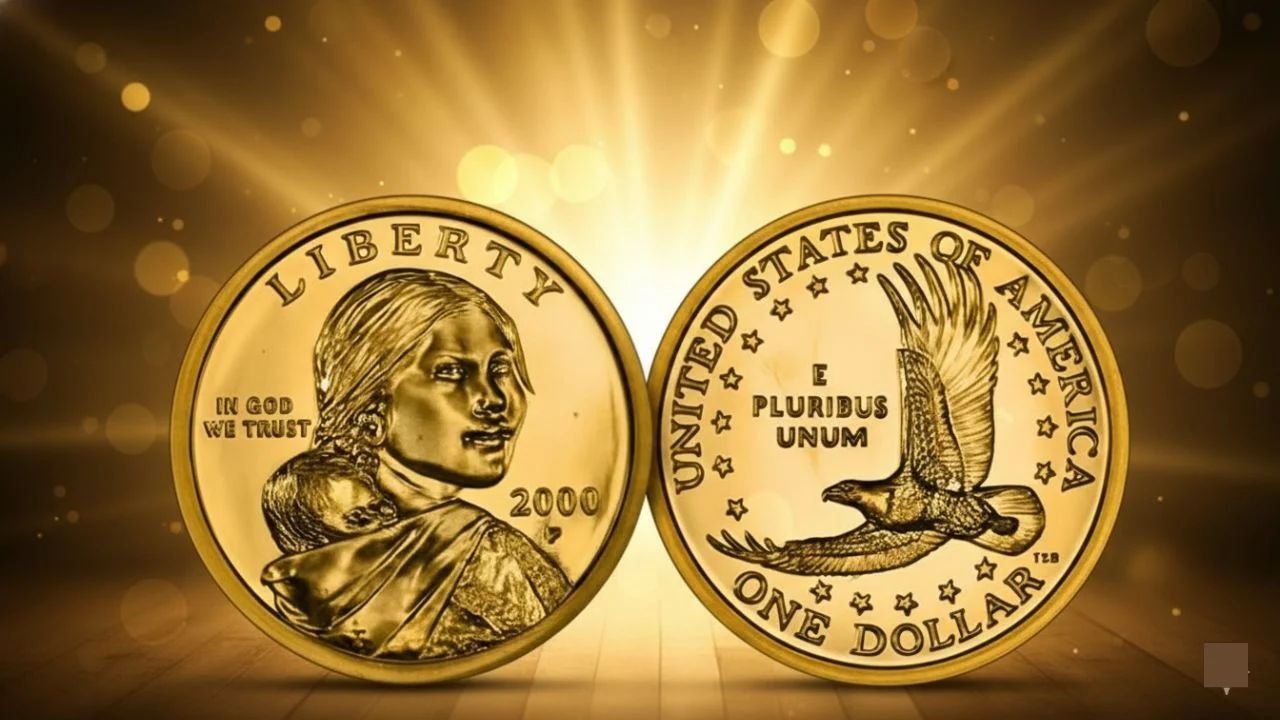
On the front of the coin is a portrait of Sacagawea carrying her infant son, Jean Baptiste. The image reflects strength, guidance, and continuity. The original reverse design, used from 2000 to 2008, displays a soaring eagle. Beginning in 2009, the reverse was redesigned to celebrate the achievements and cultural contributions of Native American tribes and individuals, with a new theme introduced each year. This evolving design approach has made the series more engaging for collectors who enjoy building complete sets.

Complete Sacagawea Dollar Information Table
| Feature | Details |
|---|---|
| Years of Issue | 2000–2008 (Original Eagle Reverse), 2009–Present (Native American Reverse Series) |
| Issuing Authority | United States Mint |
| Obverse Designer | Glenna Goodacre |
| Reverse Designers | Thomas D. Rogers (2000–2008), Various Artists (2009–Present) |
| Composition | Copper core with manganese-brass cladding |
| Total Composition Breakdown | 88.5% Copper, 6% Zinc, 3.5% Manganese, 2% Nickel |
| Weight | 8.1 grams |
| Diameter | 26.5 mm |
| Edge | Plain (smooth) |
| Mint Marks | P (Philadelphia), D (Denver), S (San Francisco – Proofs) |
| Notable Varieties | 2000 Cheerios Dollar, 2000-P Mule Error, 2000-P Wounded Eagle |
| Highest Verified Sales | Mule errors have sold for hundreds of thousands; top-grade Cheerios Dollars have exceeded $25,000 |
Rare Varieties and Special Editions
Most Sacagawea dollars found in circulation are worth only their face value. However, certain versions and minting errors have attracted serious attention in the numismatic world. One of the most talked-about varieties is the “Cheerios Dollar.” In 2000, a promotional partnership between the United States Mint and General Mills placed newly minted Sacagawea dollars inside cereal boxes. A small number of those coins were struck with enhanced detail on the eagle’s tail feathers. Today, authenticated examples in high-grade condition can sell for thousands of dollars. Another remarkable rarity is the 2000-P “Mule” error. This unusual coin was mistakenly struck using the obverse of a Washington quarter paired with the reverse of a Sacagawea dollar. Because only a few confirmed examples exist, it has become one of the most famous mint errors in modern American coinage.

Importance of Condition and Grading
Condition plays a critical role in determining value. Coins that remain in Mint State condition—meaning they show no signs of circulation wear—are generally more desirable. Professional grading services authenticate coins and assign them a numerical grade based on preservation and strike quality. Even small differences in grade can significantly impact a coin’s market price. For this reason, collectors who believe they possess a rare variety often seek expert evaluation before selling or investing further.

Why Collectors Still Value the Sacagawea Dollar
Collecting Sacagawea dollars can be both affordable and rewarding. Beginners can start by assembling circulation strikes from different years and mint marks. More experienced collectors may focus on proof coins, low-mintage issues, or confirmed error varieties. The series blends cultural tribute, artistic craftsmanship, and the excitement of discovery. While sensational headlines sometimes exaggerate values, verified auction results show that genuine rarities can still command impressive prices when authenticated and preserved properly.