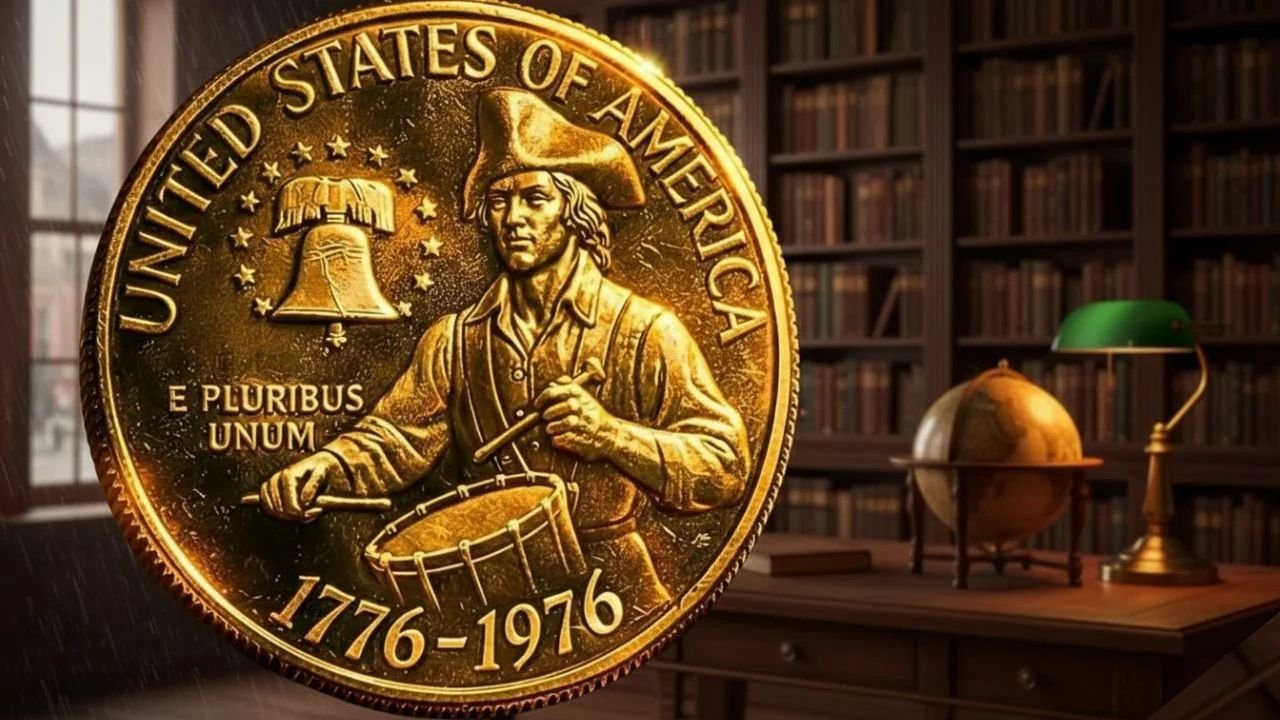
Rare 1776–1976 Bicentennial Quarter : You’ve probably seen those special quarters with the drummer boy on the back and wondered if they’re worth anything. The 1776–1976 Bicentennial Quarter shows up everywhere – in cash registers, piggy banks, and even stuck between couch cushions. While most are just regular 25 cents, some rare versions could actually pay for your new phone or even a used car. Let’s break down what makes these coins special and how you can spot a hidden treasure without being a coin expert.
Why America Went Crazy for These Quarters
Back in the mid-1970s, America was throwing itself a huge 200th birthday party. The US Mint wanted everyone to join the celebration, so they created special quarters, half dollars, and dollar coins with unique designs. For the quarter, they kept George Washington on the front but added the double date “1776-1976” to mark the anniversary. The big change happened on the back – they replaced the eagle with a cool colonial drummer boy design by Jack L. Ahr, surrounded by thirteen stars representing the original colonies. These coins first showed up in 1975 and stuck around through 1976, and people went nuts collecting them as souvenirs. The government made two versions: regular ones for spending and fancy silver ones for collectors who wanted something extra special.
Quick Facts at a Glance
| Feature | What You Need to Know |
|---|---|
| Dates on Coin | 1776-1976 (made during 1975-1976) |
| Front Design | George Washington looking left |
| Back Design | Drummer boy with victory torch and 13 stars |
| Regular Metal | Copper-nickel mix (looks like normal quarter) |
| Silver Version | 40% silver – heavier and shinier |
| Mint Marks | No mark (Philly), D (Denver), S (San Francisco) |
| Face Value | 25 cents, obviously |
What Makes Some Bicentennial Quarters Worth Big Money?
Here’s the deal – finding a valuable Bicentennial Quarter is like finding a needle in a haystack, but at least you know what needle looks like. Most of these bad boys are still only worth a quarter, so don’t quit your summer job yet.

- Silver quarters are your best bet – Check the edge of the coin. If you see a brown stripe, it’s regular metal. Solid silver color all around? You’ve got the 40% silver version that’s worth more just for the metal alone.
- Mint marks matter a lot – Look near Washington’s ponytail on the front. “S” means San Francisco and those are usually the valuable silver proofs. “D” is Denver, no mark is Philadelphia – these are common unless they’re in perfect condition.
- Condition is everything – Coins that look fresh from the mint with zero scratches or wear are worth way more than beat-up ones that’ve been jangling in pockets for decades.
- Error coins are the real jackpot – Sometimes the mint messes up. Doubled lettering, off-center strikes, or coins stamped on the wrong blank can turn pocket change into serious cash.
How to Be a Coin Detective in 5 Minutes
You don’t need fancy equipment to check your quarters. Just grab a handful and look closely at each one. The dual date and drummer boy are easy to spot. Flip it over and check near Washington’s neck for that tiny mint mark. Then look at the edge – that copper stripe tells you it’s the regular kind, while solid silver means you might have something special. Hold it next to a normal quarter – does it feel heavier or look different? Silver quarters have a slightly duller, grayer shine than the bright white of regular ones. Even if your coin isn’t worth thousands, it’s still cool to own a piece of history that your grandparents might have saved during America’s birthday party. Some collectors just enjoy finding these and keeping them as memories, which is totally fine too.
Frequently Asked Questions (FAQ)
1. My grandma gave me a bunch of Bicentennial Quarters. Am I rich?
Probably not rich, but maybe a little richer. Unless they’re the silver proofs or have crazy errors, most are still just quarters. But hey, free money from Grandma is always awesome.

2. What’s the easiest way to spot a silver Bicentennial Quarter?
Look at the edge. Regular quarters have a visible copper stripe running around the edge. Silver ones look solid silver all the way through. Also, silver quarters weigh a tiny bit more – 5.75 grams instead of 5.67 grams.
3. Could I find a valuable one in my school lunch money?
It’s possible but super rare. Most valuable ones were pulled from circulation years ago by collectors. Your best chance is checking old coin jars at home or asking relatives if they saved any “special” quarters from the 70s.

4. What’s the most a Bicentennial Quarter has ever sold for?
Error coins have sold for thousands – we’re talking $5,000 to $10,000 for really dramatic mistakes. Perfect condition silver proofs can fetch $20-30, while super high-grade regular ones might bring $100-200 from serious collectors.
5. Should I clean my old quarters to make them look better?
Never ever clean coins! Collectors can tell, and cleaning actually destroys the value. That old tarnish or toning is natural and sometimes makes coins more valuable. Just leave them exactly as you found them.
6. Where can I sell one if I think it’s valuable?
Start by asking a local coin shop just to look at it – most will check for free. You can also check online auction sites, but be careful about scams. If it might be really valuable, consider paying for professional grading first so buyers know it’s authentic.